Second-generation racers who decided to build the parts themselves.
“I started my business in 1982 in a four-car garage in a residential part of town. Over the past few decades, we've produced almost 400,000 engines.”
Four-car garage, Kearney NE
Across four decades
Kearney, Nebraska
Every engine, before it ships
The background behind the tolerances.
Norris Marshall grew up around it — his father was a 1950s hot-rodder and drag racer, and Norris ran bracket and stock car programs of his own before opening the shop. Engines that have to survive a race weekend teach you different lessons than engines built for a spec sheet.
He still runs the company today, sits on the SEMA Board of Directors and chairs the SEMA Political Action Committee, and BluePrint is a founding member of PRI. The people who set our standards are the same people the industry asks to set its own.
One engine at a time
Norris Marshall opens a machine shop in a four-car garage in a residential part of Kearney — boring blocks and doing valve jobs for people who needed an engine to last.
From machine shop to manufacturer
Rebuilding other people's parts stops being enough. The shop begins engineering its own components so the tolerances are set here, not inherited.
Dyno testing every engine
A production dyno program replaces sampling. Every engine that ships is run and certified before it is crated.
OEM-level, still in Kearney
A 210,000 square foot factory, more than 400,000 engines built, around 80 engines a day, and an industrial division supplying gensets, forklifts and chippers.
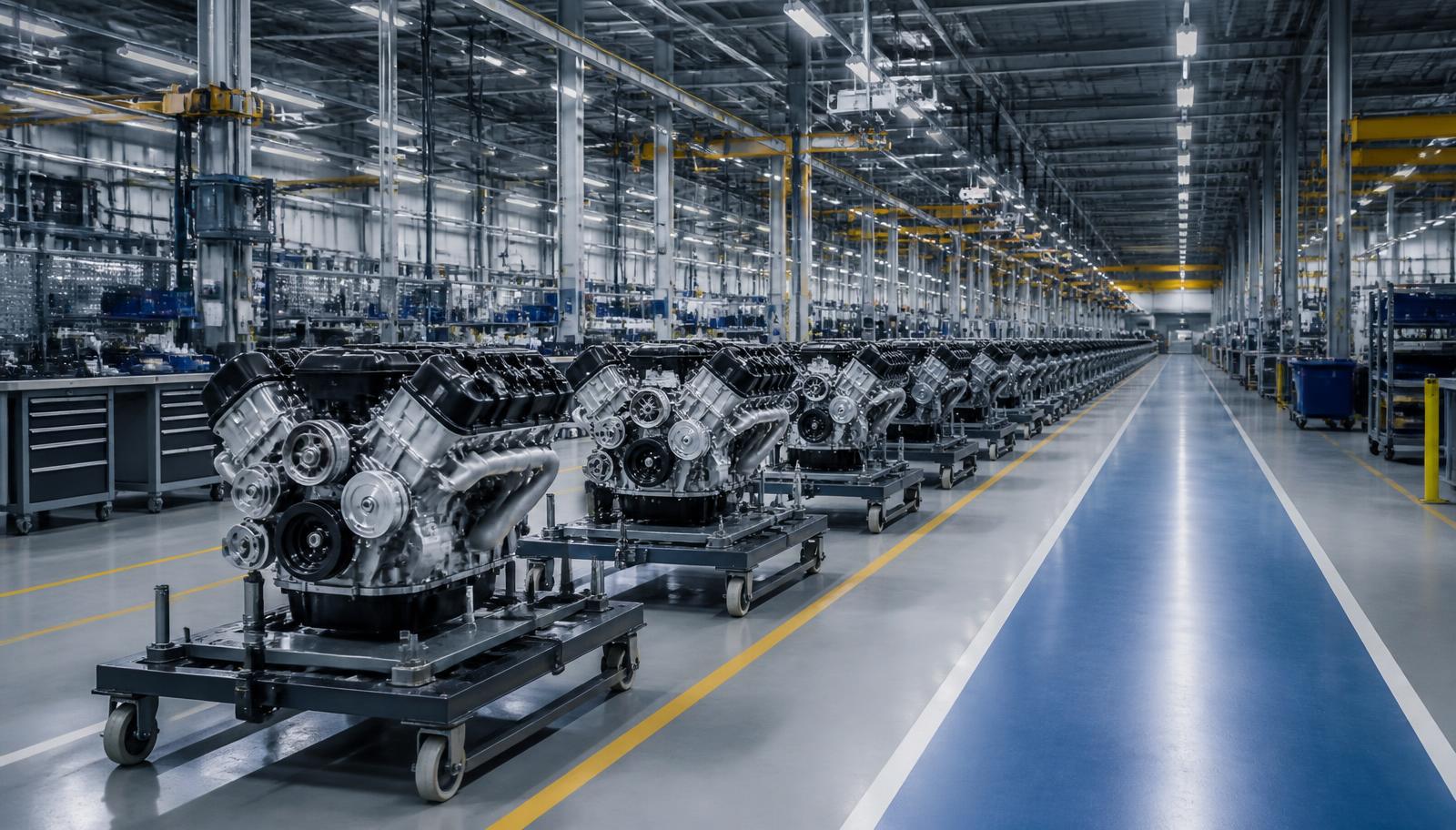
Big enough to engineer it. Small enough to answer the phone.
We sell through AutoZone, NAPA and Speedway Motors, and we still take the call when someone in a home garage wants to know which cam ended up in their engine.